Too much
“Reply to this letter about Jane Smith at 14 Example Road. Her account number is…”
Privacy before convenience
Treat a consumer AI chat as an online service, not a private notebook. Share only what the task needs, remove identifying details and review the provider’s current privacy controls before uploading files or connecting accounts.
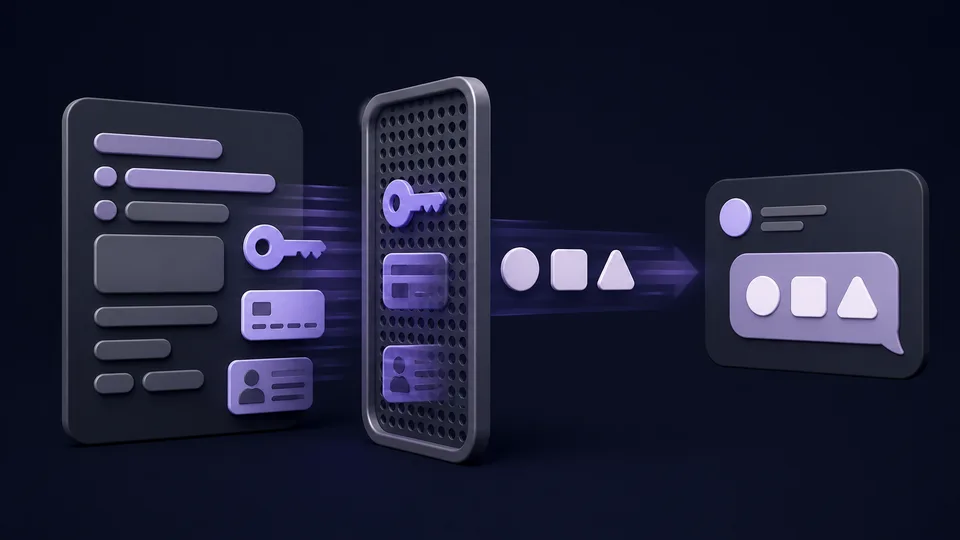
Data minimisation
Most everyday tasks do not need real identities or exact records. Replace identifying details with short placeholders and add them yourself after you leave the AI service.
“Reply to this letter about Jane Smith at 14 Example Road. Her account number is…”
“Write a polite reply asking a company to explain a disputed charge. Use placeholders for the name, address and account.”
Copy the draft into your own document, then insert the real details there.
This is called data minimisation: use only the information needed for the task. Removing a name may not be enough if dates, locations and unusual circumstances still identify the person.
Files, images and connected apps
Documents can contain names, addresses, comments, tracked changes or metadata. Photos can reveal faces, locations, documents in the background or information on a screen. Connected email, drive, calendar and photo services may give an AI access to much more context than a typed prompt.
If you shared something by mistake
Delete the chat if the service allows it and review the provider’s privacy guidance, but do not assume deletion reverses every use or retention rule. Change an exposed password immediately. Contact your bank through an official number if payment information was involved. Tell your employer or the relevant person if their confidential information was shared.
Go directly to the account provider, bank, employer or relevant authority using a trusted website, app or phone number.